
From the Editor
Thirty-Six
Holes
2027 is going to be a big year
for Atlantic golfers.
Fox Harb’r Resort sits on eleven hundred acres of oceanfront on the Northumberland Shore of Nova Scotia, about ninety minutes by road from Halifax and from Moncton. Ron Joyce, of Tatamagouche, opened it in 2000. There is golf, a spa, a deepwater marina, an estate vineyard and a jetport with a 4,885-foot runway. In 2027 there will be thirty-six holes of golf.
Two new golf courses: The Ocean Course will be links golf along the Northumberland Strait. The Vineyard Course will be an inland heathland course, modelled after the classic heathland courses of southern England. Doug Carrick and Tom McBroom designed both, together, and did not divide the work between them.
That last part is the story, and it is why this issue opens where it does. Two architects with forty years apiece submitted independent proposals for the property. The routings came back almost identical. Neither has quite got over it.
The first half of this book is the golf: how the two courses differ, which holes each architect is proudest of, and how a man from Tatamagouche came to build all of it.
The second half is everything that happens when you put the clubs away. The tide goes out twice a day and leaves the shoreline behind it. The oysters come from one family in Malagash Bay who have been at it since 1867. There are clays, axes and archery in the woods, trout in the ponds, two boats going out on the Strait between June and September, and a hydrothermal circuit that finishes in a room walled with hand-stacked Himalayan salt.
The Architects
Two Minds,
One Routing
Carrick and McBroom submitted separate plans.
The two barely differed.
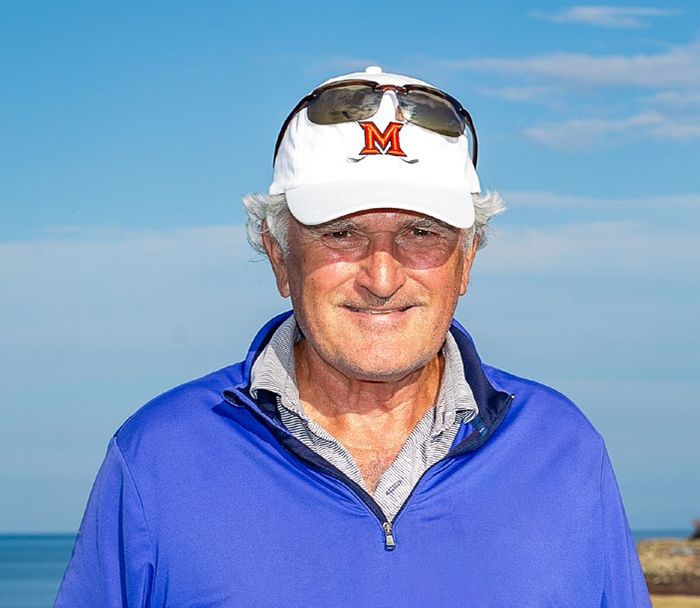
Tom McBroom. In business since roughly 1985; has worked in Canada, England, Finland and China.
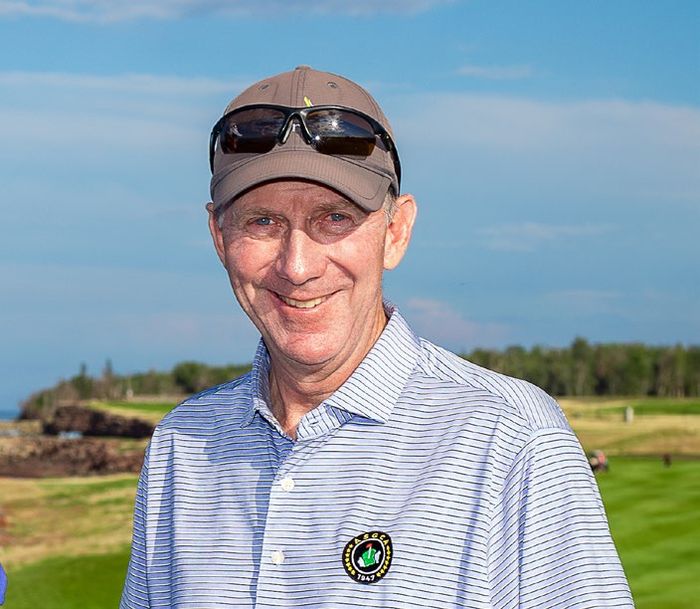
Doug Carrick, who designed both courses alongside McBroom.
Golf architecture is a business of signatures. One name goes on the scorecard, one reputation rides on the result. The credit is rarely shared.
Fox Harb’r asked two of Canada’s better-known architects to work on the same property at the same time. Doug Carrick and Tom McBroom designed both courses together.
“The project has been a collaborative effort throughout the process of designing and building both golf courses,” Carrick says. “Neither Tom nor I led the process on the Vineyard or the Ocean Courses.”
McBroom puts it more bluntly. “We never divided the work. It was a great relationship because we understood how to make it work for the best results. Our view was that two creative minds were better than one.”
What persuaded them both was something that had happened before either was hired. Each man produced an initial routing on his own, without seeing the other’s.
The agreement went as far as the single most consequential decision on the property — where to show the golfer the ocean. Both men, separately, held it back until the fifth hole.
“Funny thing is that both Doug and I did this on our initial independent proposals to Fox Harb’r,” McBroom says. “Great minds think alike.”
“The goal was to create a distinctive golf experience that would appeal to a younger demographic and couples.”
Doug Carrick
What the client asked for was less prescriptive than the result suggests. Carrick went back to his notes from the first meeting, with owner Steven Joyce, resort president Kevin Toth and head of golf Elliott Isenor, before either architect was hired.
“The vision they presented for the project was to provide a luxury golf experience for existing members and for guests to the resort, taking full advantage of the spectacular coastal setting. The goal was to create a distinctive golf experience that would appeal to a younger demographic and couples.”
“Both our initial routings done in the proposal stage were almost identical,” McBroom says, “so we really had no fundamental differences in the design and routing of the two courses. Doug and I have grown up together in the golf business and generally think alike. I think this worked to the advantage of both Fox Harb’r and us, as we did not waste time arguing. We spent our time trying to deliver two great courses.”
McBroom’s account is shorter. “The client never really gave instructions other than there was to be 36 holes of high calibre. It was Doug and my idea to develop an ocean course and an inland course that was ultimately called the Vineyard Course.”
So the two of them decided which two courses they would take. Links on the water. Heathland inland, drawn from Britain. And a working assumption, early on, that one would matter more than the other.
“At one point we both thought that the Vineyard Course might be secondary to the Ocean Course,” McBroom says, “but as the construction proceeded we quickly realized the Vineyard Course was going to be as special as the Ocean Course.”
Ask either man where they disagreed and the answers are almost disappointing.
“There were very few disagreements between us regarding the design of the golf courses,” Carrick says, “other than a couple of bunker placements that we debated. Overall, both courses are presented as Tom and I envisioned them together.”
Two courses, one argument about bunkers. Carrick was asked what he is proudest of that no guest will ever notice.
“That Tom and I are still friends. LOL.”
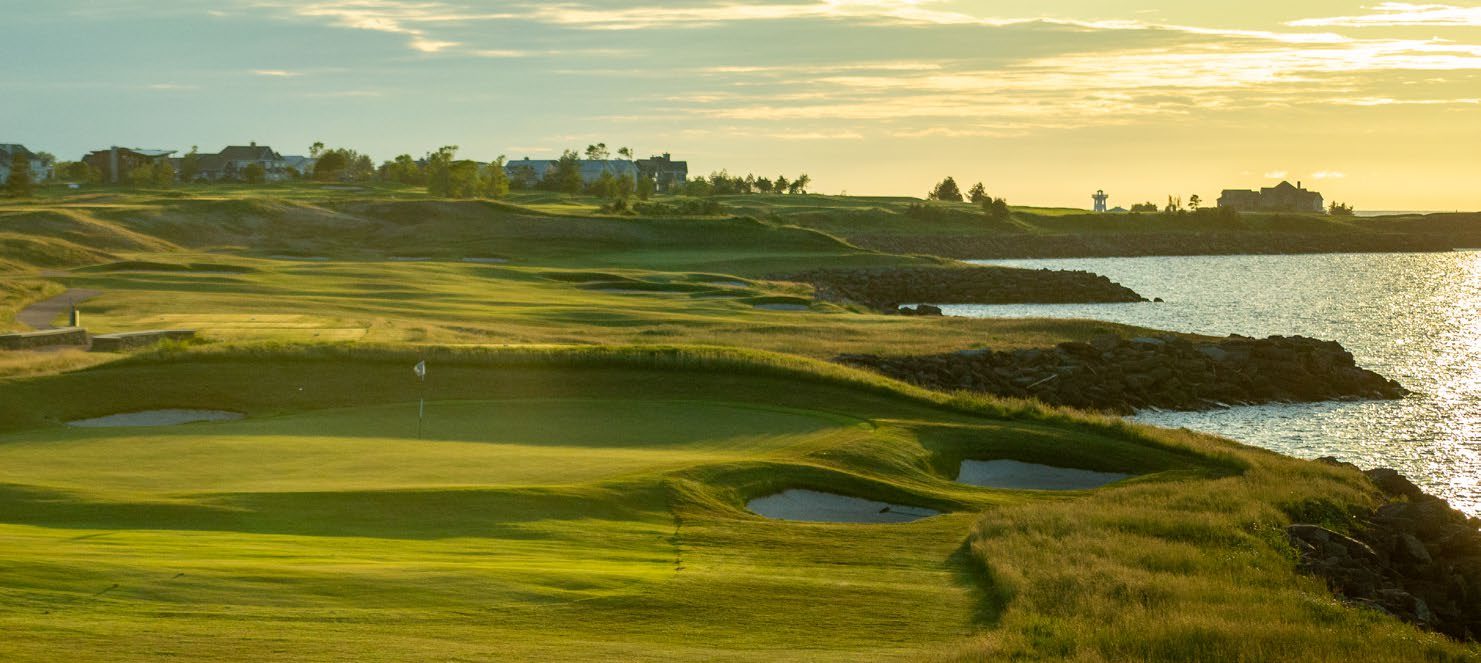
The Ocean Course
Ocean
Can Wait
The Strait isn’t revealed until the fifth tee.
Both architects decided that on their own.
The Ocean Course
Each architect names a different favourite hole.
Play the 15th and the 17th and pick a side.
The Ocean Course will not open on the water. It goes inland first, and it does that on purpose.
“Our intent was to let the excitement level on the golf course build gradually,” Carrick says, “by taking golfers inland away from the Ocean before they get to the elevated 5th tee where they get a panoramic view of the Ocean. From the 5th hole onward, golfers will have a view of the Ocean on every hole, climaxing with a stretch of holes running along the coast from the 15th to the 17th holes.”
McBroom calls it the reveal. “A tantalizing view of the ocean from the tees at 5 and 6 are a teaser for what is to come. The ocean is in full view for the remainder of the course.”
Both men arrived at that sequence independently, before they had met about the job.
The ground did not supply all the drama. On the first six holes, the architects built it. “We purposely created dramatic rolling and dune-like topography on the first six holes of the ocean course to create dramatic holes,” McBroom says.
Elsewhere, the site’s higher ground was used as found: Carrick lists elevated tees at the 5th, 6th, 7th, 9th and 12th.
Then there is the wind, which will decide more here than any drawing.
“Fox Harb’r can be very windy at times due to its open exposure to the ocean,” Carrick says. “The prevailing wind in the spring and fall seems to be from the west and northwest, while the summer months often bring winds from the south and east. So a golfer has to be prepared to face wind from almost every direction at some point. The key to designing golf holes in a windy location is to change the direction of hole alignments as much as possible, even if they are only subtle changes in direction.”
McBroom is precise about how that came out. Holes 7, 8, 10, 11, 12 and 13 will play into the prevailing westerly. Holes 14 through 18 will play downwind. The finish deliberately turns away from the setting sun.
The bunkering changed to suit local wind conditions, thanks to an insight from a man who works the course every day.
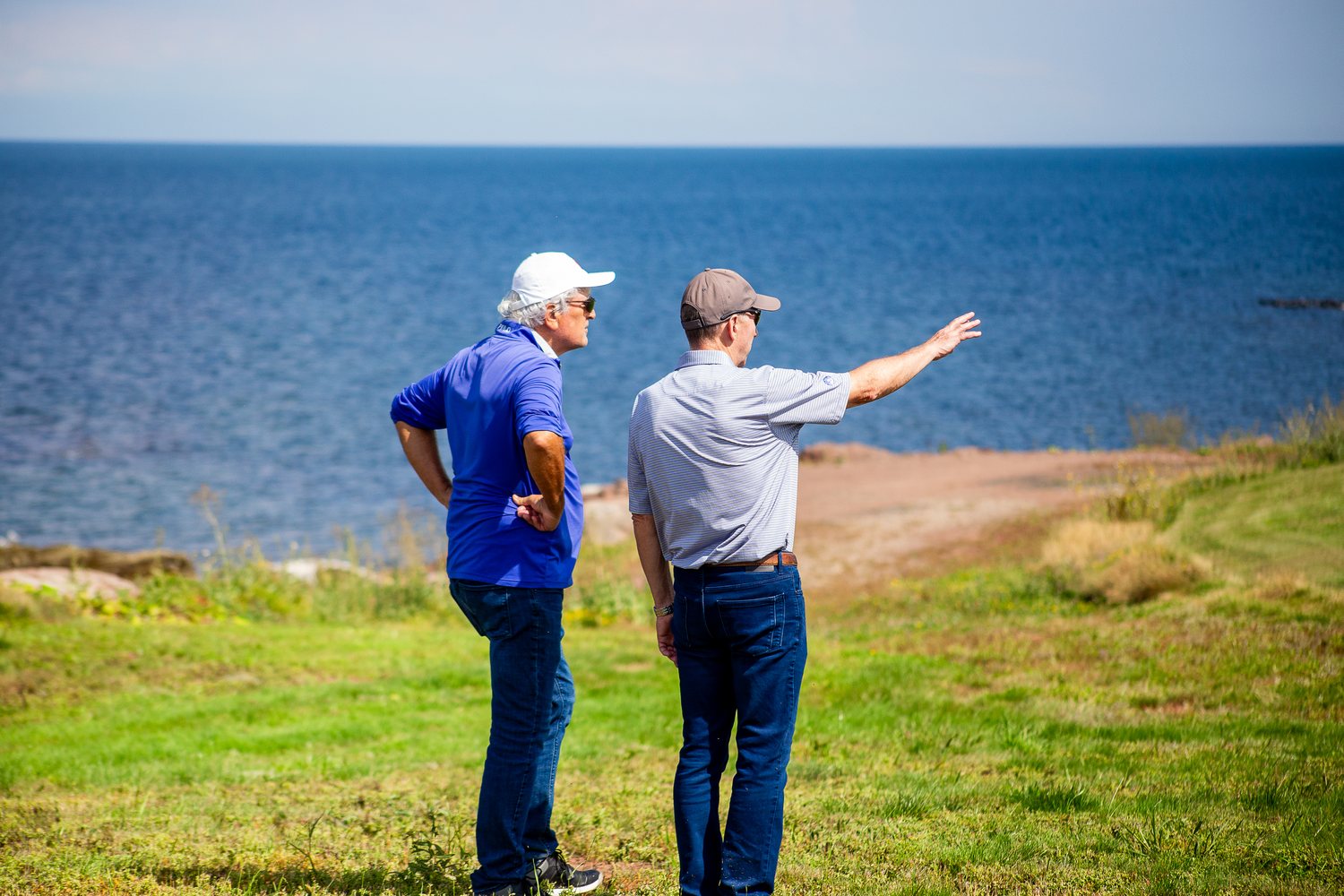
Doug Carrick and Tom McBroom on the course, August 2026. Carrick is pointing at the stretch from the 15th to the 17th.
“Thanks to Aaron Little’s incredible knowledge of the conditions at Fox Harb’r, we learned that the large bunkers that were previously designed for the golf course were susceptible to wind erosion, and that replacement of bunker sand was a regular maintenance concern throughout the golf season,” Carrick says. “Based on Aaron’s advice, we decided to design small pot bunkers on the Ocean Course, which was also consistent with the links design theme.”
Ask the two architects to name their favourite hole, and you get two answers.
McBroom takes the 15th. “It will come to be remembered as one of the great ocean par 3 holes along the likes of 7 at Pebble Beach or 16 at Cypress Point. It plays as a mid to long iron downwind to a well-bunkered green set above the rocky shoreline. A bailout area is located at the front of the green for players not inclined to hit the green in one shot.”
Carrick takes the 17th, a par five along the bluffs, and describes it shot by shot.
“A bold tee shot hit down the left side must avoid a central pot bunker and the coastal bluff along the left side to set up the 2nd shot towards the green. After hitting the ideal tee shot the golfer must decide whether to risk trying to reach the green in two, or to lay up for a short downhill pitch into the green. Three bunkers guarding the left side of the approach must be carried to reach the green in two, while a layup approach must avoid a bunker on the right.”
And then the last one. “The third shot into the infinity green is one of the most spectacular and daunting shots on the course, especially when the wind is blowing hard from the southeast.”
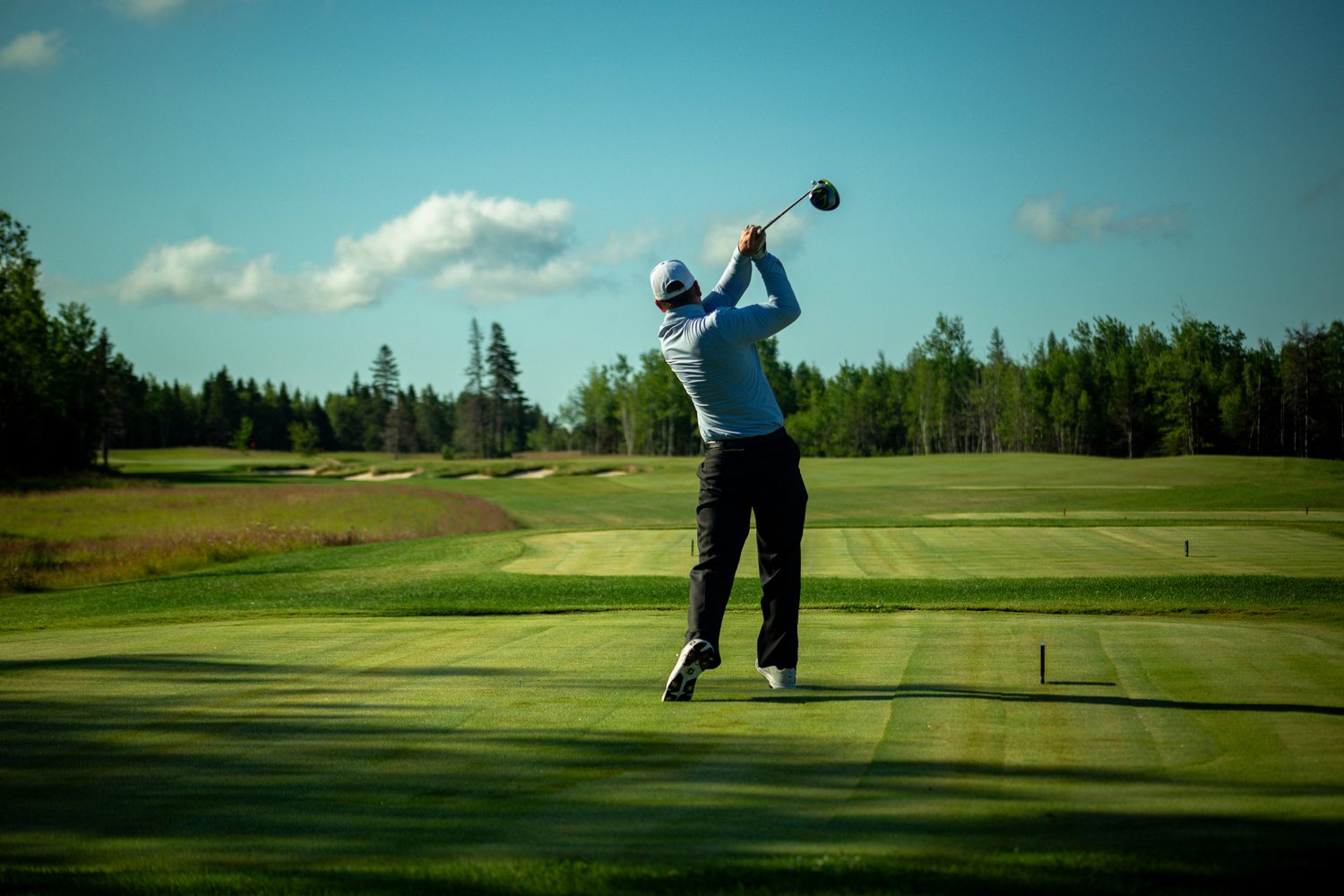
The Vineyard Course
No Second Fiddle
Inland heathland golf, drawn from Britain,
on ground the architects barely disturbed.
The Vineyard Course. Gentle ground, tree-lined, drawn from the heathland courses of southern England.
The Vineyard Course began life in both architects’ minds as the “other one”.
“At one point we both thought that the Vineyard Course might be secondary to the Ocean Course,” McBroom says. It did not stay that way. “As the construction proceeded, we quickly realized the vineyard course was going to be as special as the Ocean Course.”
The model was British. “It was always thought that the Ocean Course would be ‘links’ style and the Vineyard Course would be Heathland style, inspired by the great Heathland courses in southern England,” McBroom says. Carrick describes the same intent and adds the practical benefit: the Vineyard “would also allow golfers some respite from the wind, by offering a more sheltered tree-lined setting.”
The ground was already gentle. They left it that way.
“The terrain on the Vineyard Course was very gentle and our design intent was to be sympathetic to the natural character of the land,” Carrick says. “There is just enough movement to add interest and to surface drain water away effectively.”
The largest earthmoving on the course was not a fairway or a green. It was water. “The biggest dig that was done on the Vineyard Course was in creating the ponds on the 3rd, 6th and 11th holes.”
Those ponds are working infrastructure first. “The water hazards on the golf courses are primarily designed to store water for irrigation purposes,” Carrick says, “but they are designed in such a way that they also create some strategic interest and aesthetic value, without being overly punishing for golfers of less skill.”
McBroom frames the same decision as a question of period. “The design intent was more old world strategy where water features were not so much in play, and we wanted the courses to appear to be timeless rather than modern.”

Our foxes also enjoy the new course.
As on the Ocean Course, the two men nominate different favourite holes.
McBroom takes the 3rd, a par five with the decision deferred to the second shot. “The drive is relatively straightforward but the strategic demand begins on the second shot, offering the golfer the option to play short of the left side bunkers at the second landing area, over the same bunkers, or towards the right side, which is flanked by a large pond. The idea is to provide a variety of playing options depending on one’s skill or common sense.”
Carrick takes the 10th, a short par four.
“A more aggressive long-hitting golfer can try to reach the green with their drive, by carrying over two cross bunkers flanking the left side of the fairway onto a downhill slope that will direct the ball towards the green. Accuracy is a premium as the green is protected by bunkers on both sides, leaving a narrow gap only 10 yards wide in which to run the ball onto the green.”
His summary is the best line either man gave us. “The 10th is a birdie hole that is also fraught with danger.”
The Vineyard also contains the clearest example on the property of a safe shot that costs you. “The tee shot on the 17th hole looks relatively benign at first glance,” Carrick says. “Playing well to the right of the bunker that guards the left side of the fairway looks like the obvious play from the tee. However, a tee shot hit too far right leaves golfers with a very delicate pitch into the shallow part of the green, protected by water on the right and a bunker behind.”
McBroom, on whether the risk paid off: “Sometimes the real satisfaction in the golf design business comes with taking a risk and pulling it off. I think we did that at the Vineyard.”
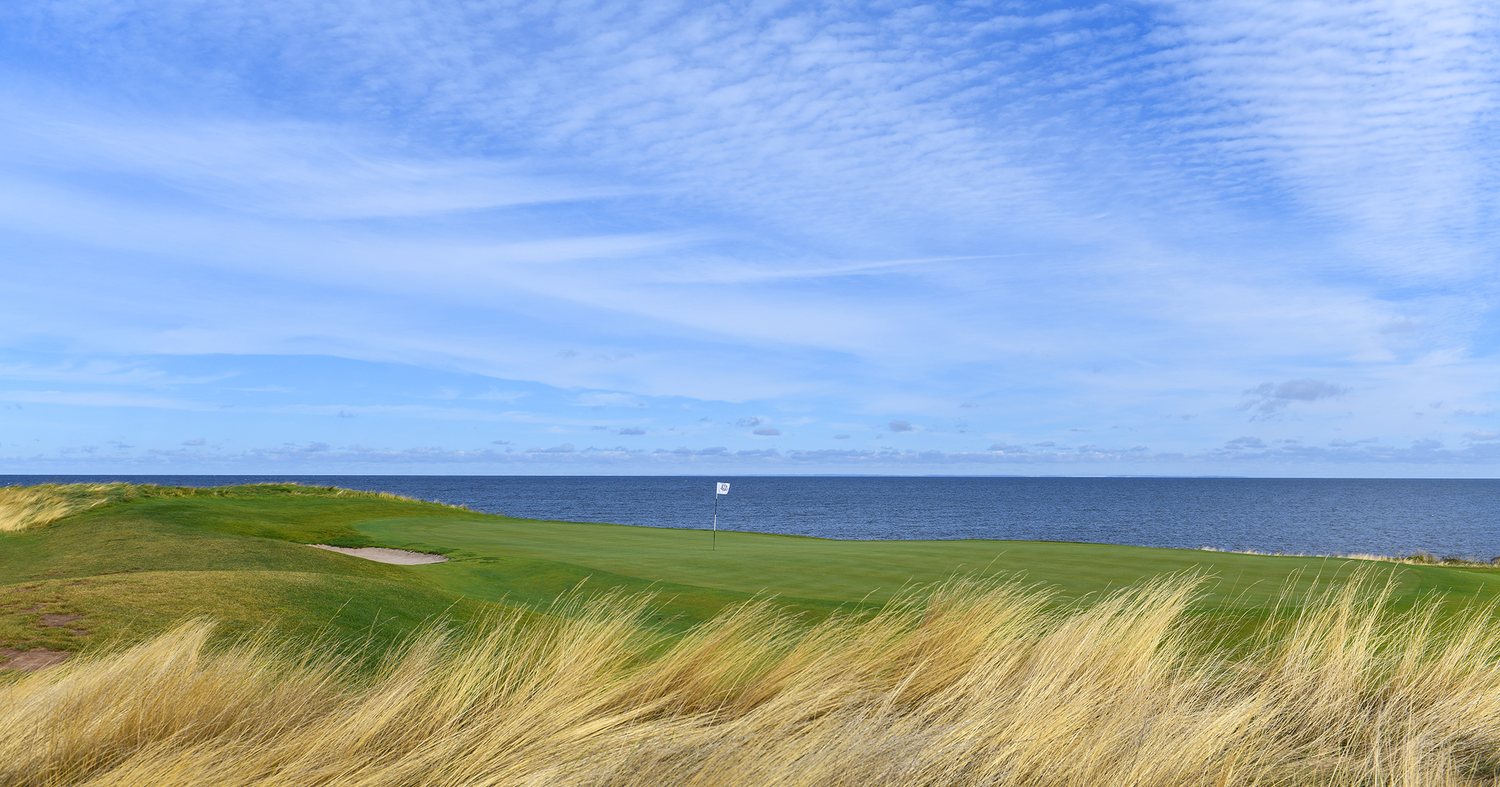
Playability
Playable,
Above All
A uniquely Atlantic dilemma: what keeps
a windy course fair for an ordinary golfer?
“There is nothing more unacceptable in resort golf than courses or holes that play too difficult,” McBroom says. “We focused our thinking on creating optimum playability for all classes of players.”
What that will mean on the ground is width. Carrick: “We designed the Ocean Course with very wide fairways — some more than 60 yards wide — to accommodate a wide variety of errant shots.”
It means the rough is scenery rather than punishment. “Even the fescue areas that flank the sides of each hole are designed to be thin and wispy so that golfers can easily find their ball.”
It means you will be able to putt from off the green. “The approach areas surrounding the greens are generous, and there is always an avenue available for golfers to roll their golf ball onto the green.”
And it means the greens are bigger than they need to be. McBroom: “Green size is larger than what might be considered normal.”
The flat ground helps in a way unrelated to scoring. “The flat terrain also makes both courses easy to walk if golfers choose to,” Carrick says. He is candid about the cost to the designer: “A golf architect has to use a little more imagination to create visual interest and character when designing on flat terrain.”
We have been working the same problem from the other end. We run four to five ladies clinics a year and demand for women’s club fittings keeps rising. The courses are set up with championship tees beyond 7,000 yards, middle tees between 6,000 and 6,500, and forward tees at roughly 5,000 to 5,600.
Twenty-Five Years
What Ron
Started
A son of Tatamagouche came home and built
a resort. Twenty-five years on, it is still growing.
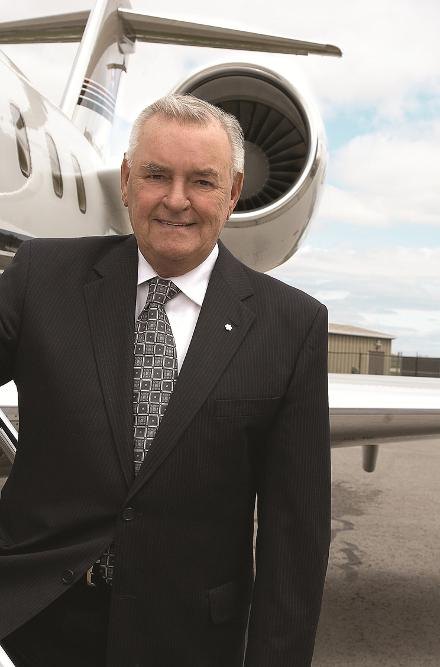
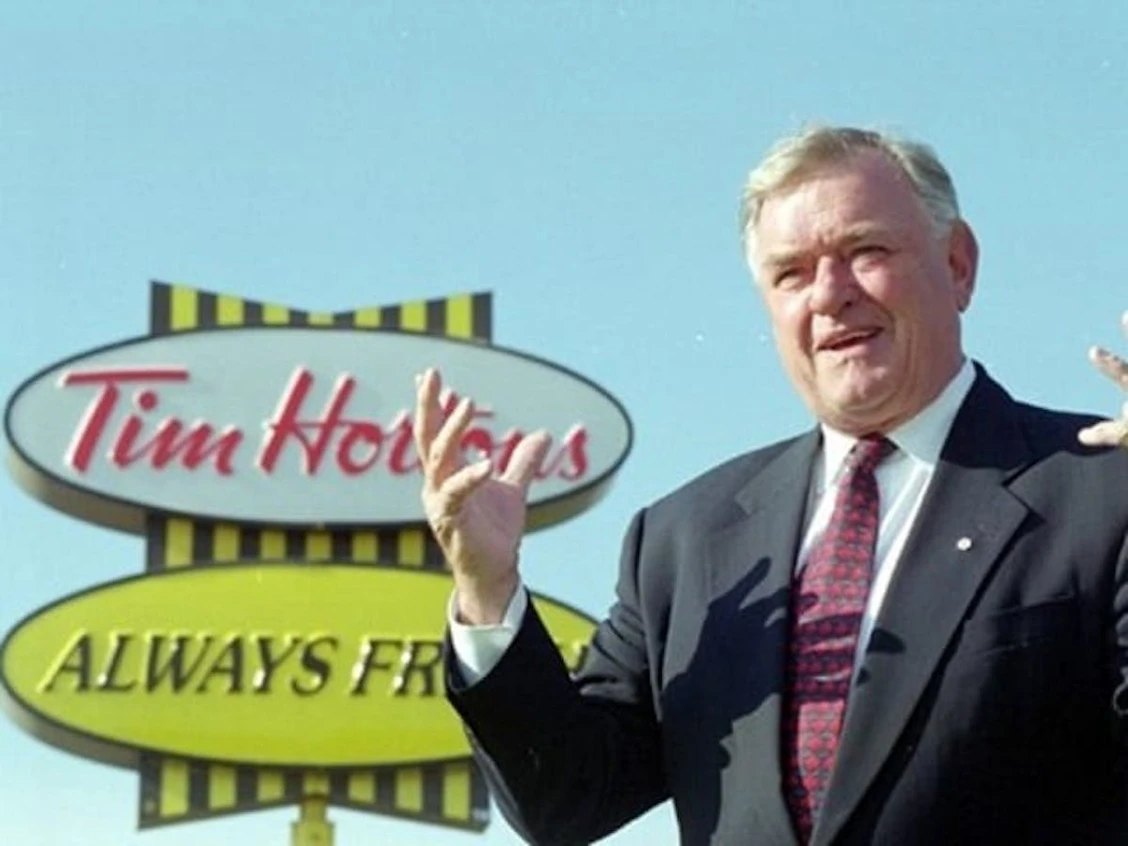
Ron Joyce was from Tatamagouche, twenty minutes down the shore. He was the first Tim Hortons franchisee and later co-founded the company. In 2000 he opened a resort on the Northumberland Strait, an hour and a half from the nearest airport, on the coast he grew up on.
The golf came first: nine holes of parkland and nine holes of true links, the second of those a rarer thing in North America than most golfers realize. Our own claim for it is that the links nine was built the way you would see it in Scotland, and that there are not many places on this continent where that is true.
In the early 2020s we decided to stop splitting the difference. Nine new holes were added to the links half. Then nine more to the parkland half. That is how you get the Ocean Course and the Vineyard Course, and it is the reason the front half of this magazine exists.
Everything else went up around the golf.
The SpaAn award-winning spa that has since expanded into hydrotherapy — the heat-and-cold circuit.
The Sporting LodgePost and beam, with a floor-to-ceiling stone fireplace. The building most guests do not expect to find at a golf resort.
The AirportWe built our own, with a fleet at the ready. Guests land on the property.
The GreenhousesTomatoes, cucumbers, peppers, herbs. Also every annual and 85 per cent of every perennial planted on the grounds. The landscaping is grown here, not trucked in.
The VineyardCool-climate vines and our own Tidal Bay, Nova Scotia’s appellation white.
The Joyce CentreBallroom, boardroom, two breakout rooms, a hospitality hub, two reception areas and outdoor terraces.
The NeighbourhoodA residential community, still growing. See page 22.
At the Table
Nova Scotia
Crafted
One bay, one family, since 1867.
We let their oysters do the talking.
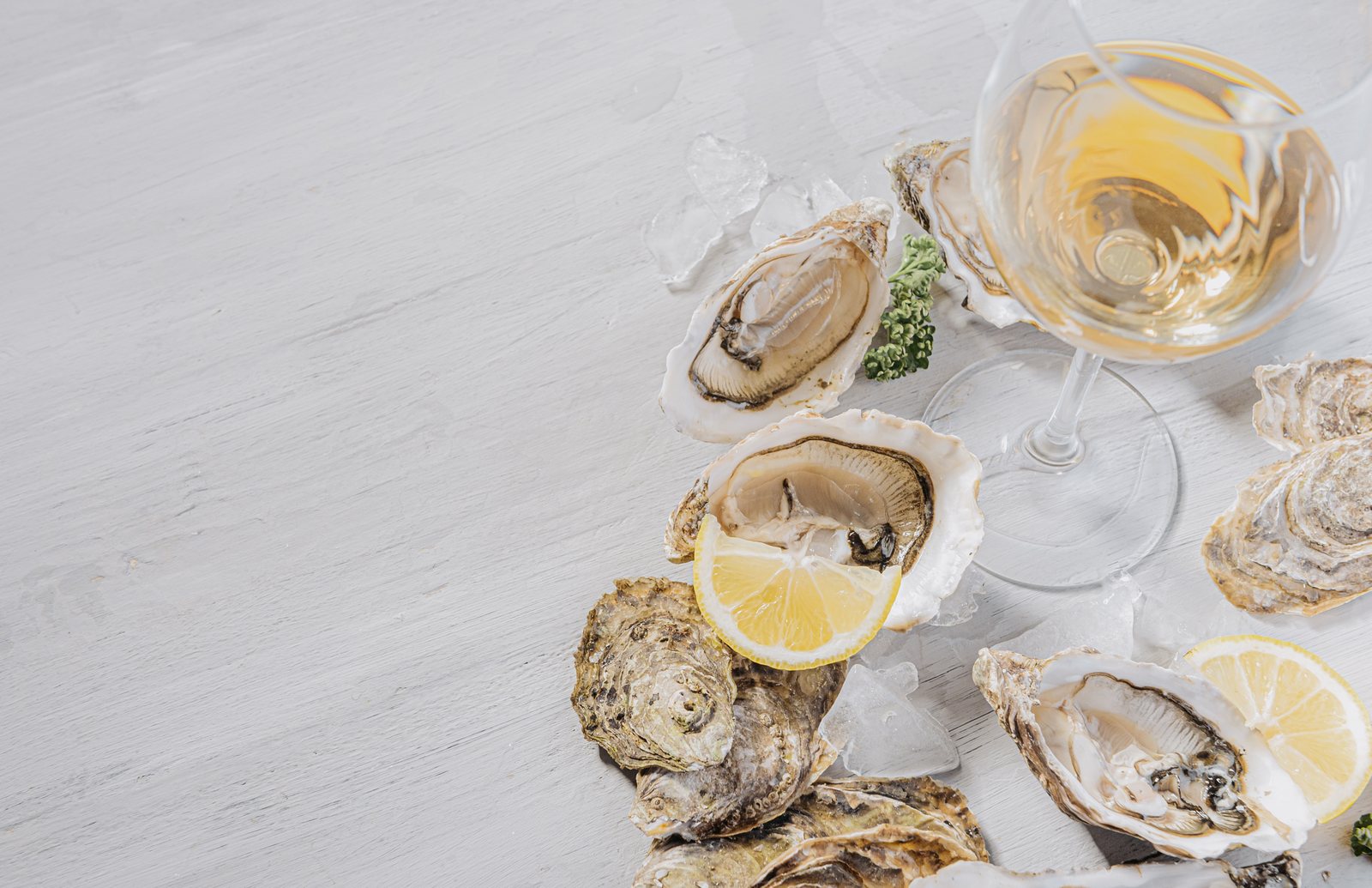
Our oysters come out of Malagash Bay, from Charles and Nancy Purdy, who work as Bay Enterprises. Their family has been on that water since 1867.
They are briny, slightly sweet, and deeper than you expect. That comes from the tides and the seabed. It does not come from anything we do afterward.
Our rule in the kitchen is short: let the ingredient speak. It holds for the halibut and the lobster as much as the oysters, which is why the good things here arrive with very little on them.
We grow grapes here too. Aaron Little manages the vineyard, and with Jost Vineyards we make our own Tidal Bay, the Nova Scotia appellation.
The Shore
Hit the Beach
The tide goes out and leaves
a mile of firm sand behind it.
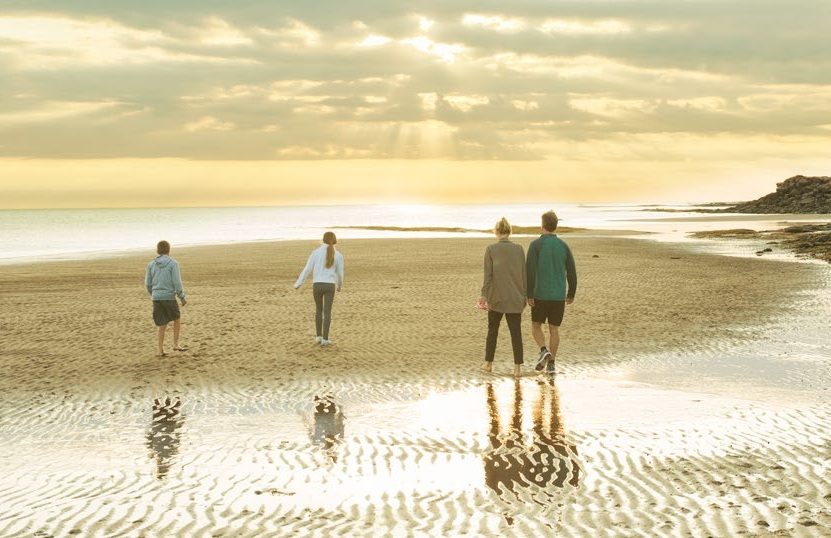
At high tide the water is a boundary here. At low tide it withdraws and leaves sand, red sandstone and tidal pools that were not there an hour before. The sand is firm underfoot and follows the curve of the coast for as far as you care to go.
The rock is the interesting part — red sandstone shelves and outcrops holding shallow pools that keep their water when the strait goes out. Look for crabs between the rocks, snails on the stone, small fish in the clear water.
The tideline changes every day: sea glass worn smooth, shell fragments in thin lines, driftwood bleached by salt and sun. Offshore, harbour seals rest on the sandbars. They look like grey stones until one of them moves.
Check the tide tables and ask at Guest Services before you set out. Wear grip on wet rock, keep well back from any seal, and give yourself time to get back.
Sporting
Beyond the
Fairway
Clays, axes, arrows, trout,
and two boats on the Strait.
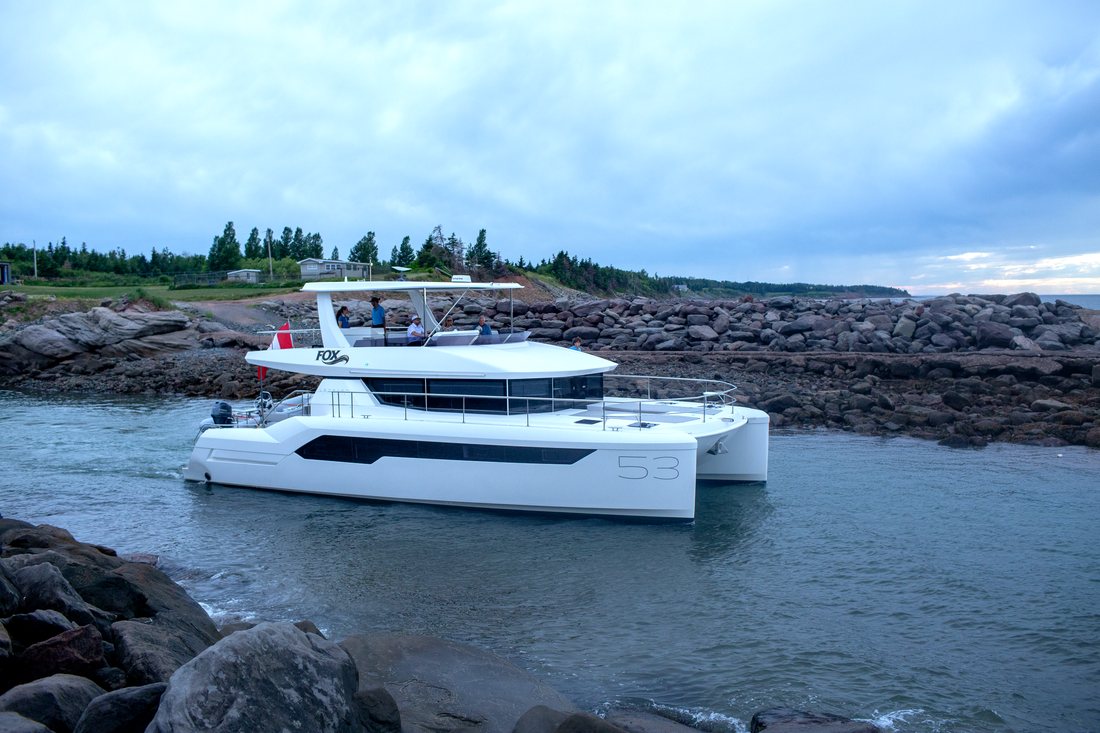
Fox, our catamaran, coming in past the breakwater.
Sporting Clays
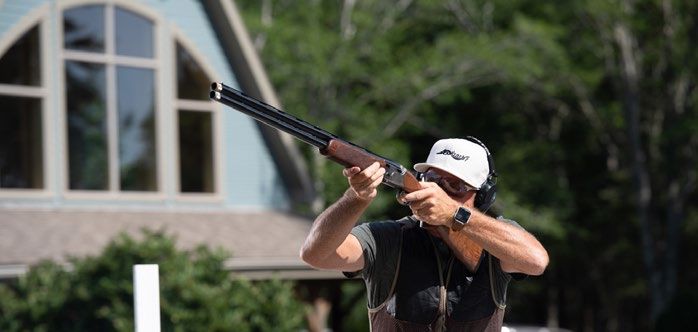
Two games share the same coastal woodland. The five-stand is the compact one: you stay put while six trap machines throw at you from every angle, a mix of standard and exotic clays, the presentation changing while your feet do not. Our own line for it is “half the size, twice the challenge.” The full course is the opposite, and closer to golf — you walk it, and each station is a fresh problem. Seventy dollars a person covers the firearm, the ammunition, the targets and safety instruction, and because we are a licensed facility you do not need a permit of your own.

Axe Throwing
The lanes sit near the shooting range, which is the correct place for them. What surprises first-timers is that this is not a strength problem. It is a rotation problem. The axe turns a set number of times between your hand and the board, and the distance you stand from it decides whether the blade or the handle arrives first. The fix is almost always in the feet, not the arm.
Archery
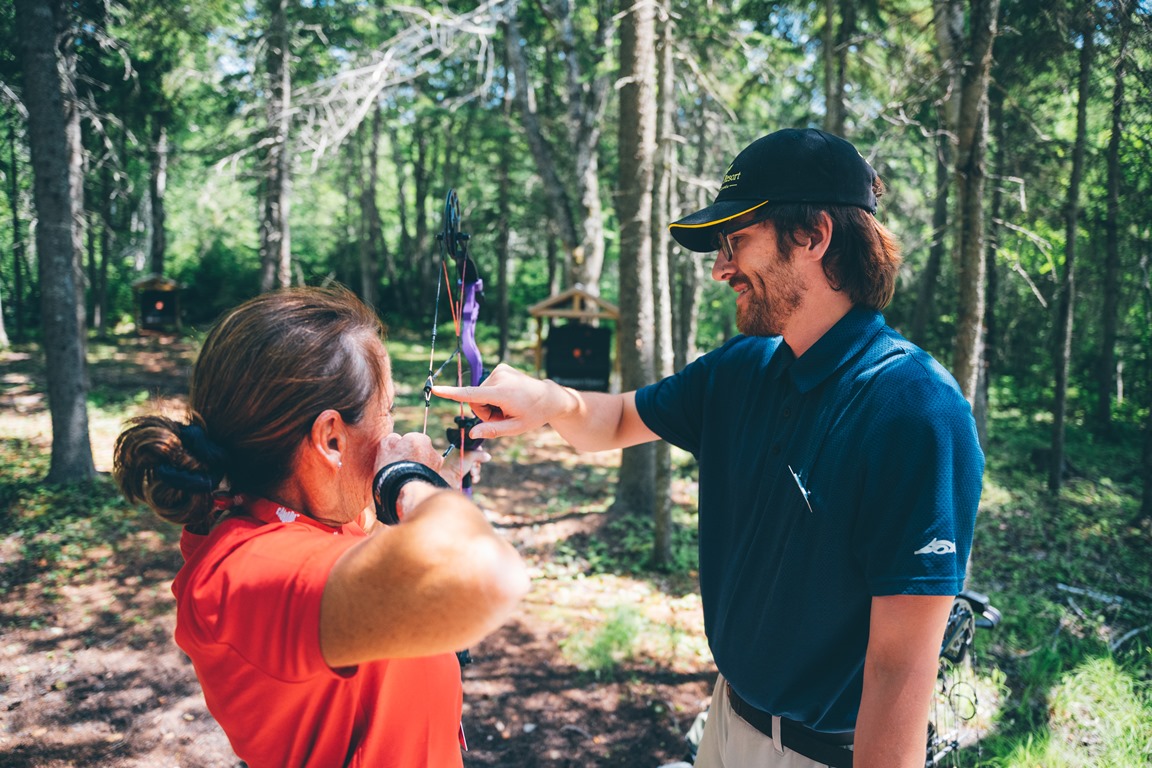
Bows and instruction are provided, which removes the only real barrier to trying it. The thing nobody tells a beginner is that archery is a game of repetition rather than strength: the draw, the anchor point against the face, the release. Get those three the same every time and the arrows group.
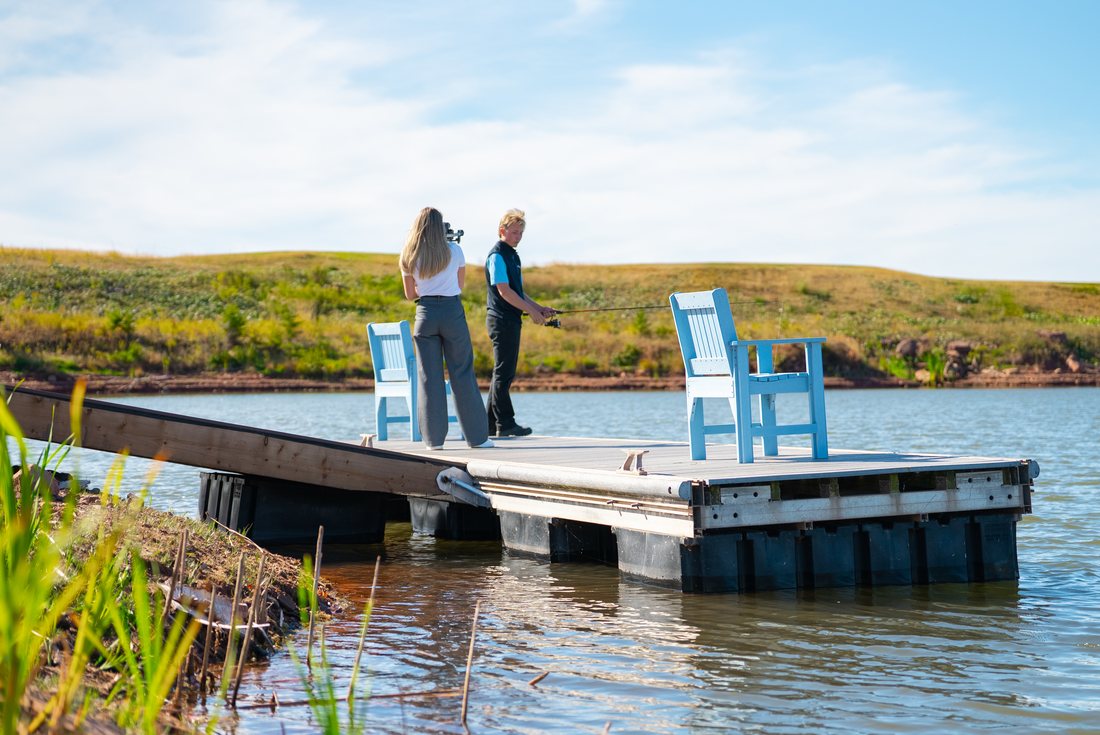
Trout Fishing
There are trout in our ponds, and they can be fished. The same water that irrigates the Vineyard Course — the ponds on the 3rd, the 6th and the 11th — does double duty on a quiet evening. Ask at Guest Services.
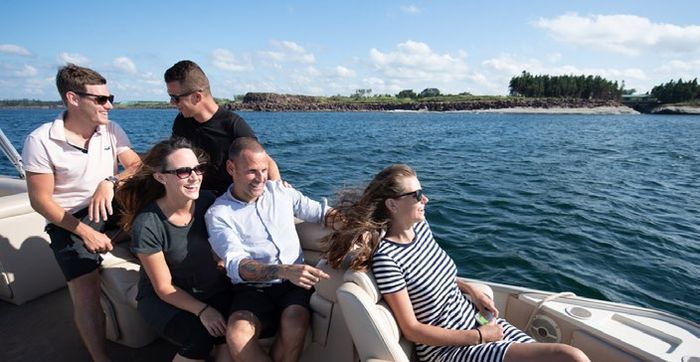
Boat Tours on the Strait
Two boats go out. The pontoon is a flat, stable platform rather than a fast boat, which is the point: it is built for standing up and looking at things. Fox, our catamaran, is the larger of the two and the newer. Tours run from 15 June to 15 September, the same window as our salt-water fishing. Harbour seals haul out on rock and sandbar to rest. How close the boat goes is the captain’s decision. Bring binoculars. Nobody promises you a seal.
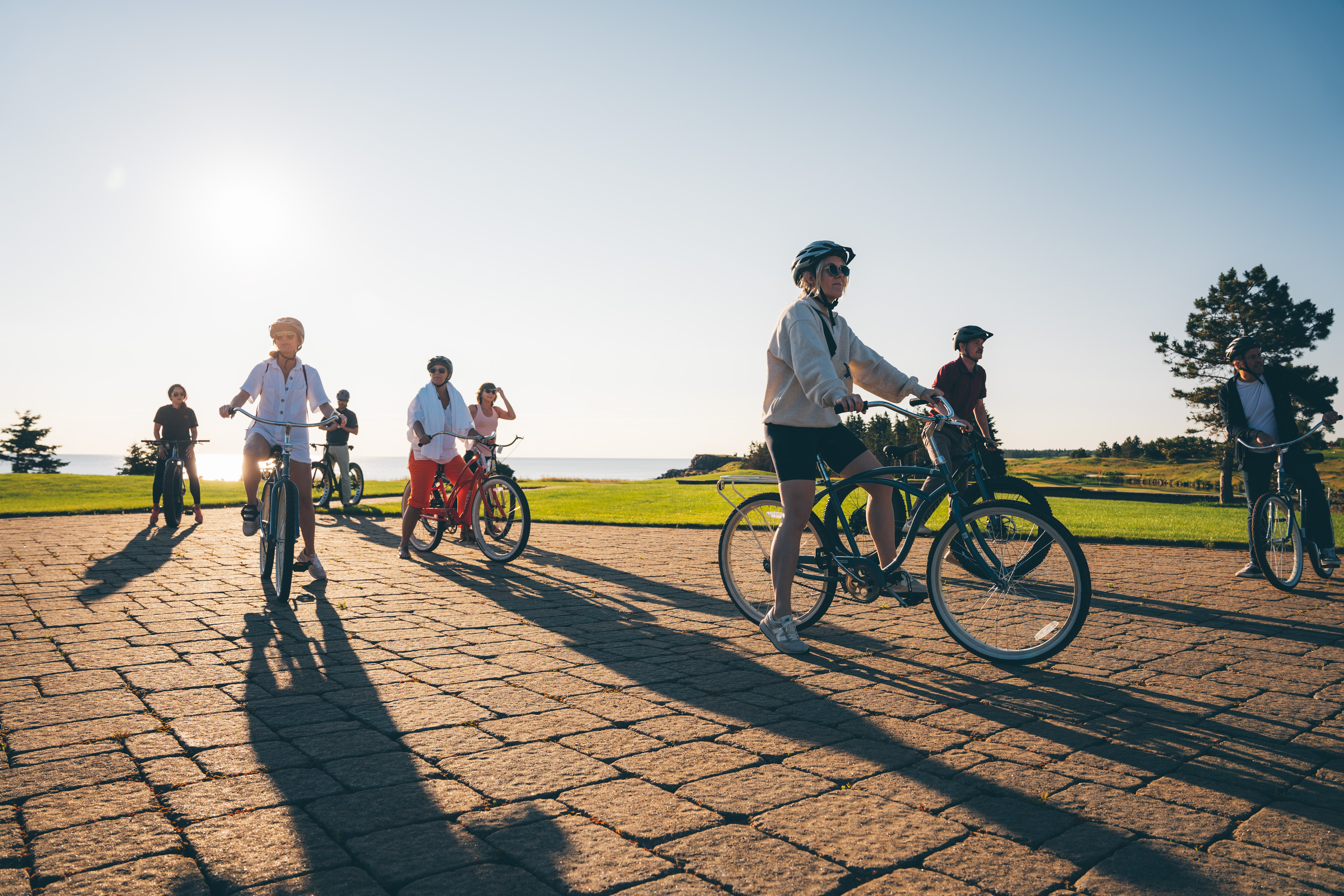
Biking
Borrow a cruiser for an unhurried ride around the resort, or book a guided e-bike tour along quiet coastal roads to Fox Harbour Provincial Beach and Mullins Point Lighthouse. The scenery changes quickly here: golf, woodland, open water and the long edge of the Northumberland Strait.
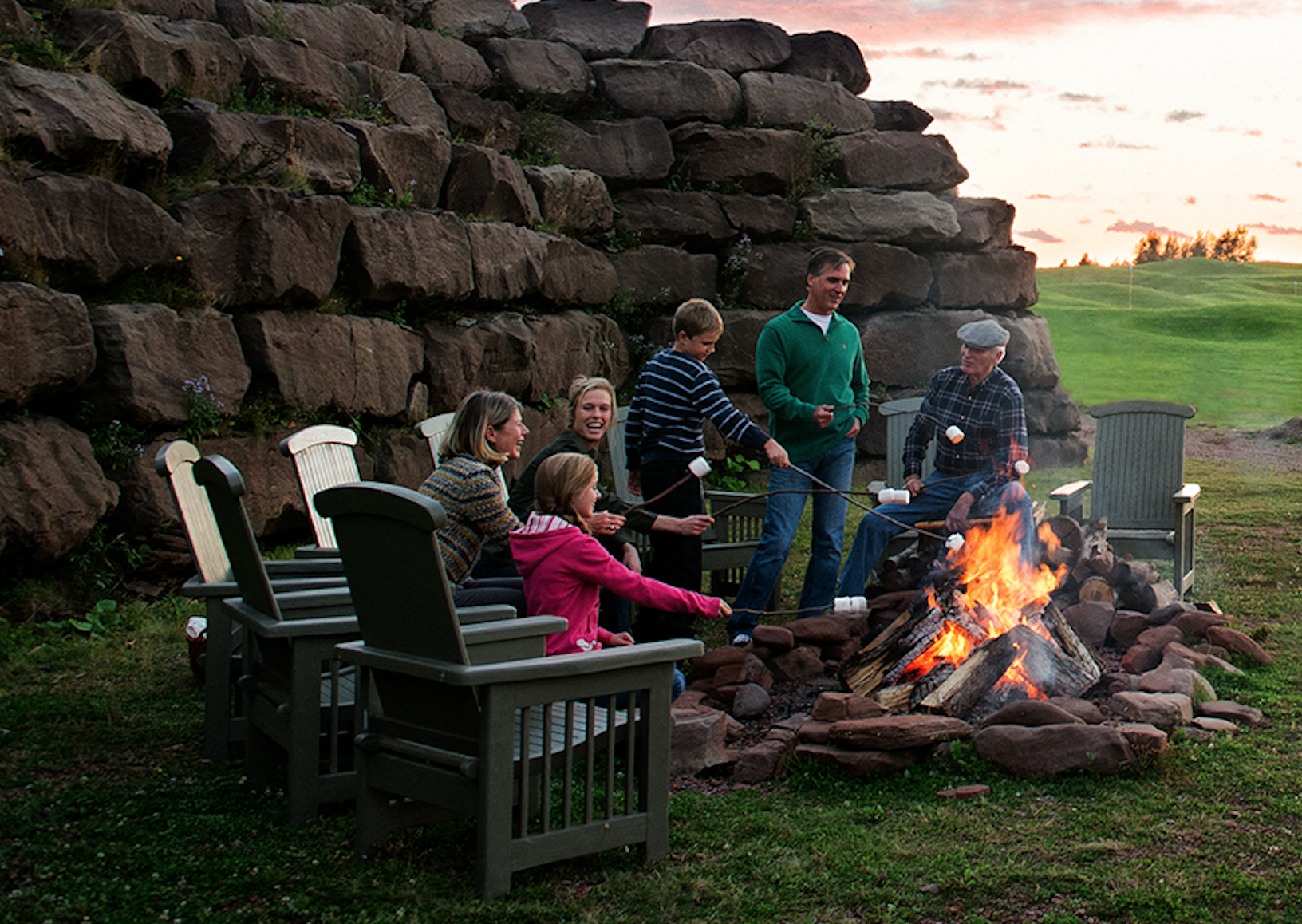
Bonfire Under the Stars
After dark, the resort builds the fire and supplies blankets and s’mores. The rest is deliberately simple: Adirondack chairs, an open sky, the ocean nearby and enough time for the day to slow down. Add lawn games if the group wants to keep playing.
Wellness
Après
Golf
A self-guided circuit
of heat, cold and quiet.
The hydrothermal circuit is self-guided, which means the pace is yours and so is the decision to stop.
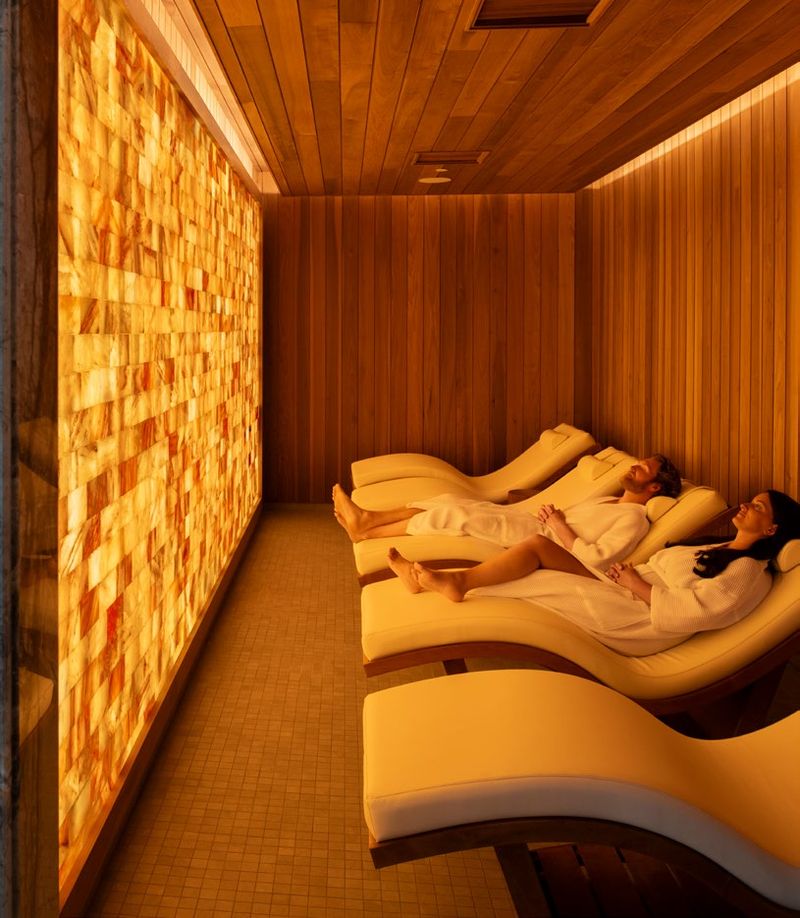
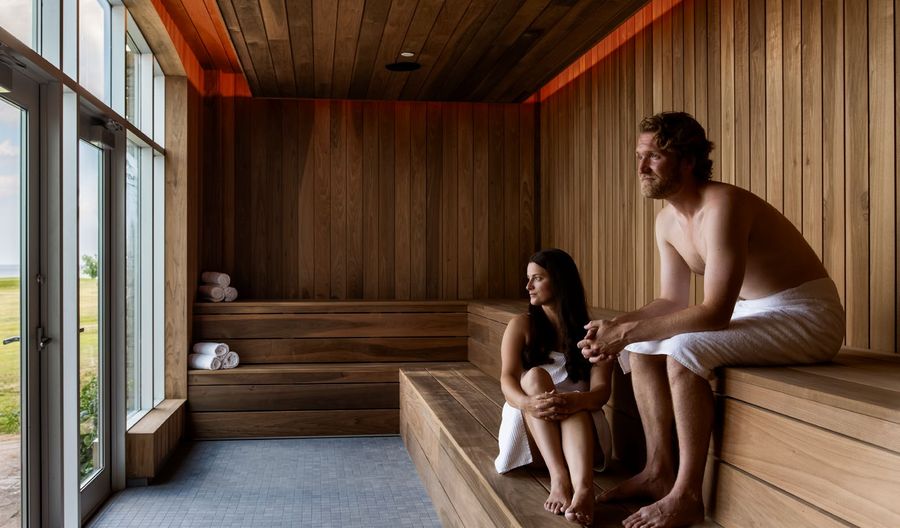
It begins in the Bio-Sauna, where floor-to-ceiling glass frames the ocean and the room carries an ambient soundscape. From there, into the aromatic steam room and its multi-sensory showers, then the cold plunge, and finally the Salt Lounge, whose wall is hand-stacked Himalayan salt.
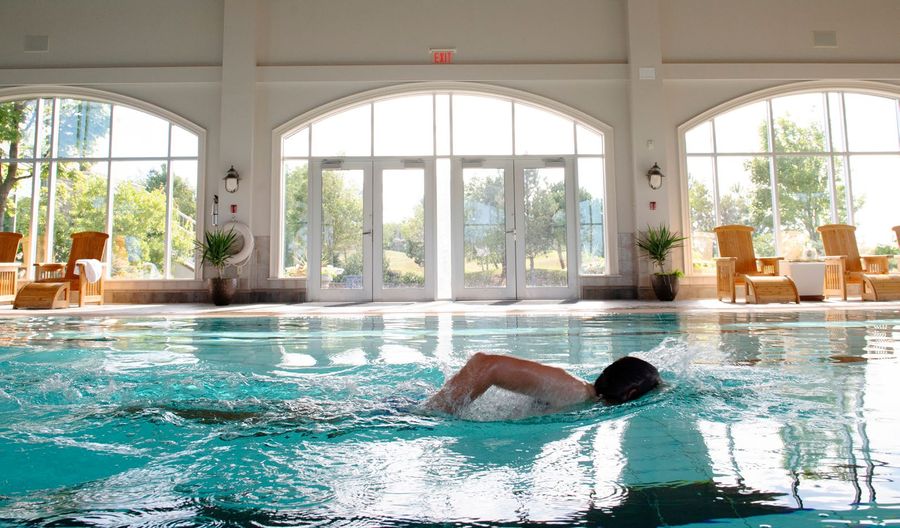
Nearby: a junior Olympic-sized pool, a whirlpool and a mineral pool.
Jennifer Findlay of Core Essence designed the circuit. Every detail of the Spa & Wellness Centre was built to support flow, in the layout and in the experience. Materials are warm and tactile. Transitions are smooth, never rushed. There is no rigid structure and no required pace — just a rhythm built around contrast, stillness and renewal.
The Spa & Wellness Centre is open to all resort guests and members.
“We weren’t trying to create a spa that looks like every other spa. We were trying to create a feeling of clarity, of restoration, of coming back into your body.”
Jennifer Findlay, Core Essence
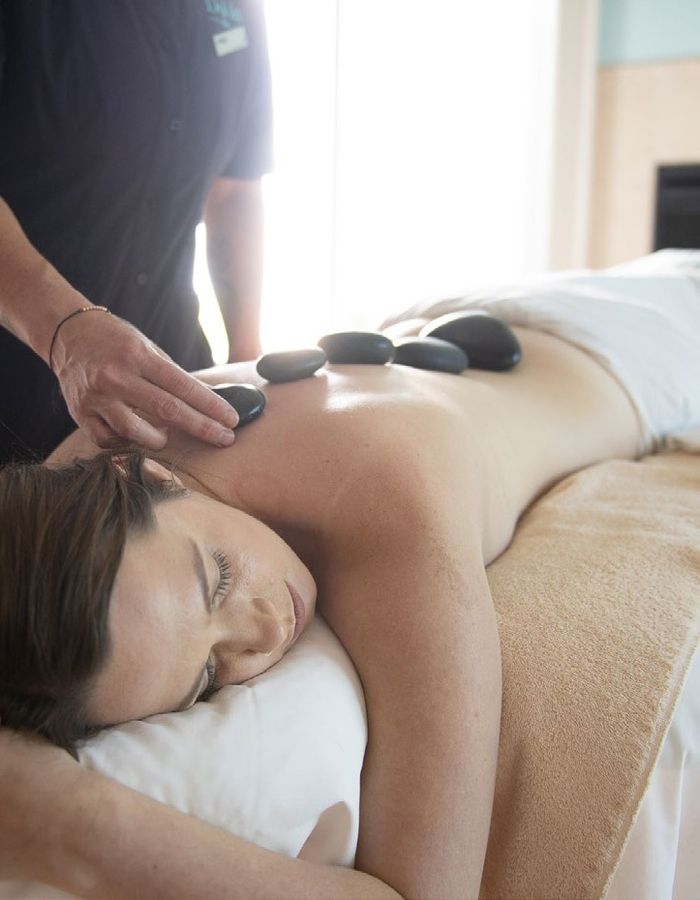
Above, left to right: the junior Olympic pool; the Salt Lounge; the Bio-Sauna; hot stone.
Living Here
Call the Front Nine Home
Ocean Course Estates puts houses along the holes that lead to the sea.
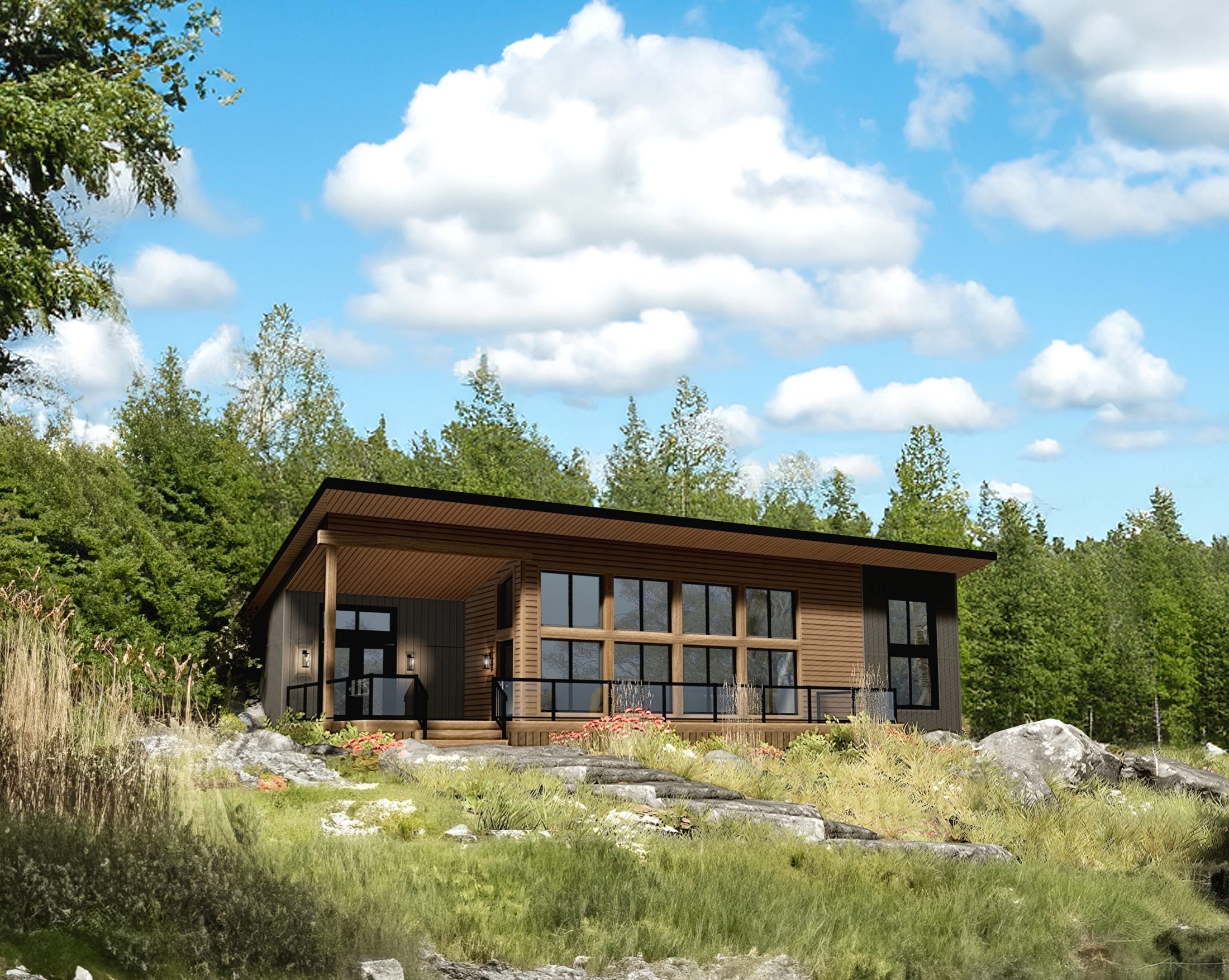
Jackpine, 1,352 square feet. The smallest of four designs; buyers may also build custom.
The front nine of the Ocean Course is the stretch Carrick and McBroom deliberately kept inland — the holes that will make a golfer wait until the fifth tee before the Northumberland Strait arrives. Ocean Course Estates is being built along it.
That is a more interesting address than an oceanfront lot, and a different one. These are golf-course homesites with views toward the Strait rather than a beach at the bottom of the garden, laid out against the part of the course the architects worked hardest to give character to, because it had no ocean to lean on.
Fifty-four homesites at full build-out, with twenty-three in the first release. Buyers can build custom or take one of four designs. The houses draw on what the developers call the architectural language of the Nova Scotia coast: natural materials, durable forms, generous windows, and rooms arranged around light, weather and gathering. On this shore, durable is the operative word. The wind that shapes the golf also shapes what it is sensible to build beside it.
The smallest, Jackpine, is 1,352 square feet with two bedrooms and no garage, from $1,087,500 plus HST. Stillwater is 1,672 square feet, three bedrooms and a two-car garage, from $1,237,500. Foxstone is 1,959 square feet, from $1,337,500. Cariboo is the largest at 1,993 square feet with three bedrooms and three baths, from $1,437,500.
What an owner is buying beyond the house is the resort itself. Thirty-six holes will be open by spring 2027. The Hydro Wellness Studio and its contrast therapy circuit. A junior-Olympic pool and a heated mineral pool. Cape Cliff, looking out at the water. A deepwater marina, an estate vineyard, and a jetport with a 4,885-foot runway. Eleven hundred acres of oceanfront, shore trails and beach.
Halifax and Moncton airports are each about 90 minutes away by road, traffic permitting.
For more information contact Eric Lum at 902-412-4812 or go to oceancourse.foxharbr.com.
Planning Your Stay
Getting Here,
and What to Do
With Two Days
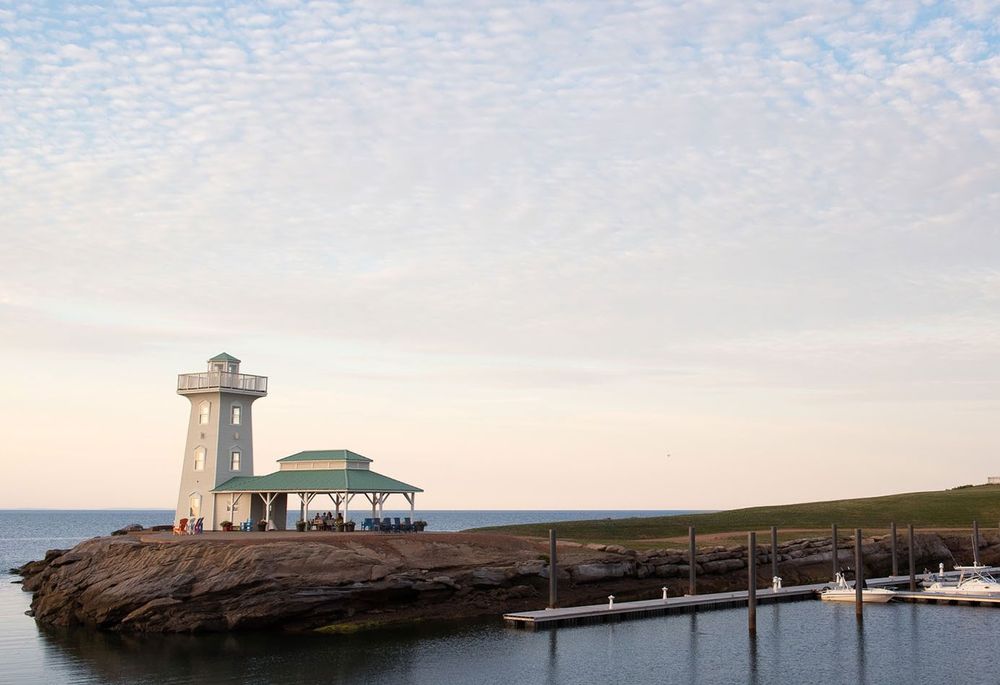
The lighthouse above the marina.
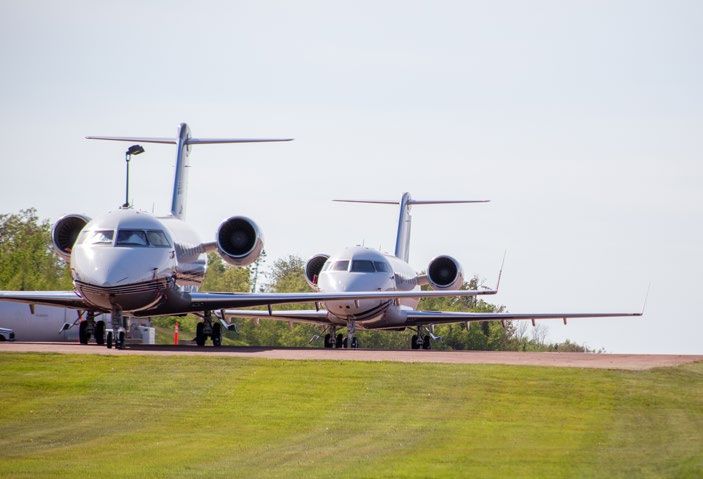
The jetport. The runway is 4,885 feet.
The Address
1337 Fox Harb’r Road, Fox Harb’r, Nova Scotia, B0K 1Y0.
By Private Air
Our jetport has a 4,885-foot runway. Our aviation material states that the strip regularly accommodates the Challenger 604, Falcon 900, Global 6000 and Dash 8, and leaves the question of suitability for any given aircraft to pilots and operators.
By Commercial Air
Halifax and Moncton are the nearest airports with scheduled service. Each is about 90 minutes from us by road, traffic permitting.
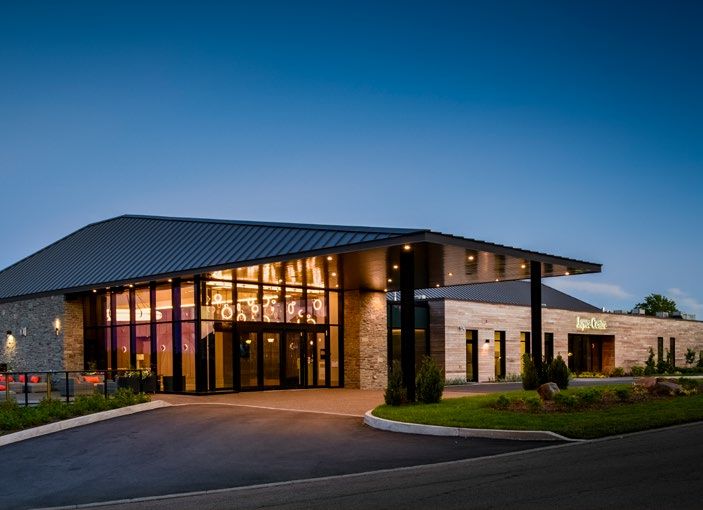
The Joyce Centre.
Day One
Play the Ocean Course. Take the reveal at the fifth slowly. Walk the shore at low tide in the afternoon if the tide obliges, then the hydrothermal circuit before dinner. Start dinner with the Malagash oysters.
Day Two
Play the Vineyard. Compare the 3rd and the 10th and decide which architect you agree with. Clays or a boat tour of the Strait in the afternoon.
If You Have a Third Day
Play both again. McBroom does not think you will have figured them out. “I think the old expression that ‘I could play these courses every day and never get tired of them’ is apt.”
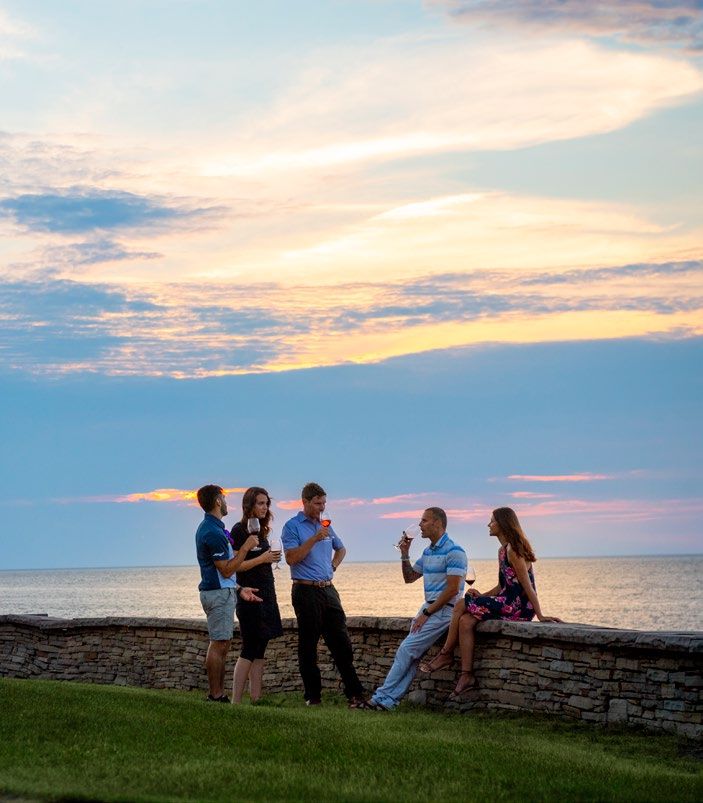
The end of a day on the point.
Artificial intelligence helped make this magazine. Every word of it was then read, corrected and approved by humans.